| HOME | EVENTS & NEWSLETTER | CHEMICAL SENSITIVITY | ELECTRICAL SENSITIVITY | MOLD | BOOKS & SAFE PRODUCTS | HEALING STORIES | NEWS & ADVOCACY | LINKS | HOW TO COPE |

ATLANTA
April 2024
Published by the
President: Andrew Heyward, First Vice President, Program Chairperson: Sydna Fisher, Second Vice President,
Membership: Joyce Taylor, Secretary: Joyce Taylor,Treasurer: Andrew B, Webmaster: Ian Greenberg, Newsletter: Sydna Fisher
YOUR SECOND HEART
The heart is the fist-size muscular center of your cardiovascular system. Some 100,000 times a day, it pumps about 10 pints of oxygenated blood from your lungs out through 60,000 miles of blood vessels to your farthest extremities. It gets help from an unexpected source, according to the latest thinking from cardiovascular experts. You have a “second heart” that plays a crucial role in your body’s circulatory system — your calf muscles. The heart pump has enough power to send blood to every part of the body, reaching your lower legs in seconds. Once the blood has reached every part of the body, the veins have to carry the oxygen-depleted blood back to the heart and through the lungs to pick up a fresh supply of oxygen. However, since the blood is flowing against gravity, sending it in the right direction will take more than a single pump from the heart. For this reason, the body uses the calf muscles to pump blood from your lower legs back to the heart.
Other leg muscles and your feet also play a role, but the calves are special because of certain properties and their position in the body. Within their system of muscles and veins, calves feature valves that act as trapdoors, opening and closing with each muscle contraction to prevent a backflow of blood. When the calf muscle contracts, the veins are squeezed and the blood is pushed along the venous system where one way valves in the leg veins keep the blood flowing toward the heart. These valves also prevent gravity from pulling blood back down your leg veins.
Exercise is essential to cardiovascular well-being. It enhances the health of veins and muscles; prompts the release of chemical messengers, known as myokines, that aid cardiovascular function and fight inflammation; and supports mitochondria, the cellular power plants in our bodies that create energy. Understanding the calves’ part in the cardiovascular system makes the role of movement all the more clear. Every time the calf muscles contract, they help blood flow against gravity. Sitting or lying down allows blood and lymph to pool in the lower legs, putting stress on your heart. The best way to improve circulation is to get moving. To boost both of your hearts, walk, do household chores, and when sitting, get up every 20 minutes and just move.
- https://experiencelife.lifetime.life/article/the-surprising-connection-between-your-calves-and-heart-health/
AIR COMPRESSION DEVICE FOR THE CALVES
Hyperice offers Normatec Go, sleeves which wrap around the calves. The sleeves squeeze and release the calves, assisting in circulation and improving the flow of blood and lymph. The product can benefit people with circulation problems, those who sit or stand for long periods of time or have fluid retention in the legs, and people recovering form surgery. Once the sleeves are charged, they are run with buttons on the device. $399. hyperice.com. 949-565-4994
TREATMENT FOR A SUPERBUG
Bradley Burnam of Atlanta was a pacemaker manufacturer rep making the rounds when he “touched the wrong table in the wrong room, followed by my own scalp” and contracted klebsiella aerogenes, a superbug often found in hospital patients, but not usually in skin. He woke up one morning with the side of his face purple and his ear swollen to more than twice its size. The attending infectious disease physician told him that he needed immediate emergency surgery, which consisted of cutting out and cauterizing the infected tissue behind his ear, a sizable portion of his earlobe and scalp, along with 50 stitches across four layers to piece the remains back together. The infection was relentless, continually returning. He had more than a dozen additional surgeries and long courses of antibiotics.
In the end, he solved his own problem. After years of research on chemistry equipment and machinery he installed in his kitchen and garage, he devised a first of its kind antimicrobial ointment that can eliminate superbugs in wounds and shows no known resistance. Hexagen, the product, is now FDA cleared and is “working miracles” for others. Bradley Burnam is the founder and CEO of Turn Therapeutics. To see the insert for the drug go to turntherapeutics.com/hexagen-insert/
SHARING
The sharing request for April is “How do you deal with EMF/electrical sensitivity?”, as well as a repeat of the March question, “How do you deal with chemical sensitivity?”. Please send your ideas to Sydna Fisher by April 26th. Thanks!.
BIRTHDAYS
April: no birthdays
May: Jean Leslie 9th, Lisa Ehler 13th, Andrew B 14th, Andrew Heyward 15th, Leah Spitzer 26th
FOR SALE
Carol Berman is selling a Therasage 360 Plus Sauna. Almost new, white, comes with a wooden chair. Best offer. See therasage.com for details.
BUSINESS
This will be your final reminder for 2024 dues. If you haven’t already done so, please send a ten dollar check made out to Atlanta HEAL in the envelope provided.
Thank you to Mark Fisher and Ian Greenberg for their assistance in this newsletter.
This newsletter is meant for information only. It is not meant to diagnose or treat any medical condition and is not a substitute for professional advice.
Think Well * Eat Well * Live Well * Be Well
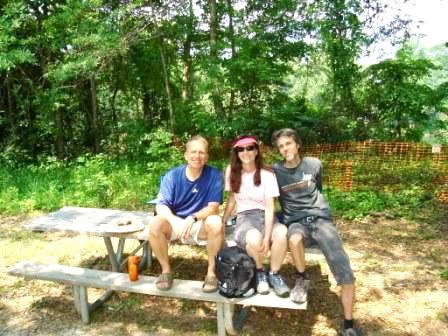
SOME OF OUR MEMBERS
 |
|
 |
|


Copyright © 2003-2024